
Sometimes the Sunday school version doesn’t match the text
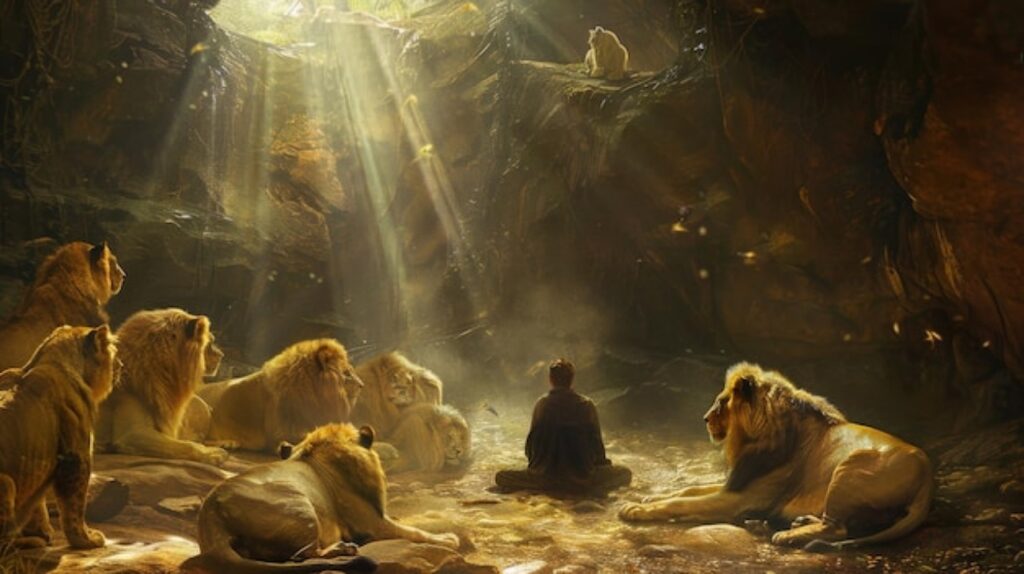
I was reading in Daniel last week when I read something about Daniel and the lions. It’s funny how the things we learn and assimilate at an early age tend to stick with us throughout our lives. That’s true for Sunday School Bible teaching. Unfortunately, what we’re taught is often a sanitized, condensed or even erroneous version. It’s not done maliciously, but it happens.
Let me give some examples. Noah is pictured with pairs of animals in almost every Sunday school illustration – the Bible says seven pairs of clean animals and pairs of unclean. The three magi who show up to see the infant Christ – we all know the image. The problem is that we don’t know how many magi there were, and they didn’t arrive until he was a child; the word suggests he was already weaned. Mary riding a donkey to Bethlehem – great image, possible even, but the Bible doesn’t say.
Now let’s look at Daniel and the lions.
Then the king commanded, and Daniel was brought and cast into the den of lions. The king declared to Daniel, “May your God, whom you serve continually, deliver you!” And a stone was brought and laid on the mouth of the den, and the king sealed it with his own signet and with the signet of his lords, that nothing might be changed concerning Daniel. Then the king went to his palace and spent the night fasting; no diversions were brought to him, and sleep fled from him. Then, at break of day, the king arose and went in haste to the den of lions. As he came near to the den where Daniel was, he cried out in a tone of anguish. The king declared to Daniel, “O Daniel, servant of the living God, has your God, whom you serve continually, been able to deliver you from the lions?” Then Daniel said to the king, “O king, live forever! My God sent his angel and shut the lions’ mouths, and they have not harmed me, because I was found blameless before him; and also before you, O king, I have done no harm.” Then the king was exceedingly glad, and commanded that Daniel be taken up out of the den. So Daniel was taken up out of the den, and no kind of harm was found on him, because he had trusted in his God. And the king commanded, and those men who had maliciously accused Daniel were brought and cast into the den of lions—they, their children, and their wives. And before they reached the bottom of the den, the lions overpowered them and broke all their bones in pieces. Daniel 6:16-24 ESV
Daniel was saved, and the king glorified God. It’s a marvelous account of God’s protection and judgment.
How old was Daniel? From childhood illustrations, I always pictured him as a young man.
Daniel was likely in his 80s, as nearly 70 years of captivity had passed. He came as a teen and was sent to the lions’ den after Persia had conquered Babylon. We usually see him illustrated as a young man.
Believers need to make a habit of reading the Word for themselves. It’s important that we know the true stories and not rely on someone else’s telling or a childhood drawing.
Read the Word. Read the Word. Read the Word.
Kevin
#ReadTheBible #BibleStudy #SundaySchool #Scripture #Lions
SUMMARY
Daniel was likely in his 80s when he faced the lions, not the young man our Sunday school pictures show. Make a habit of reading the Word for yourself so you know the true account and not someone else’s telling.
TAKEAWAY
What we learn as children sticks, and the Sunday school version is often sanitized, condensed or wrong.
Daniel was likely in his 80s when he was cast into the den, not the young man of the illustrations.
Make a habit of reading the Word for yourself rather than relying on someone else’s telling.